
Abby Hornacek’s eye injury happened during a volleyball match when a ball struck the right side of her head with significant force. The impact caused a traumatic retinal detachment — a medical emergency in which the retina separates from the back of the eye. She underwent two surgical procedures in an attempt to restore her vision. Both were unsuccessful. She permanently lost sight in her right eye and now uses a prosthetic glass eye. The injury ended her competitive volleyball career and redirected her path toward broadcast journalism at the University of Southern California, where she would build the career she has today at Fox Nation.
If you have ever watched Abby Hornacek on Fox Nation and noticed something subtly different about her right eye — or spotted the green-tinted protective lens she has occasionally worn on camera — you were picking up on something real. The story behind it is one she has spoken about with composure and honesty, and it deserves to be told with the same care. This is the complete account of Abby Hornacek’s eye injury: what physically happened, what it means medically, how it shaped the direction of her life, and what her experience can teach us about eye safety in competitive sports.
Who Is Abby Hornacek?
Before the injury, before Fox Nation, before any of it — Abby Hornacek was a competitive athlete with a genuine shot at a future in sport.
Born on April 25, 1994, in Paradise Valley, Arizona, she grew up as the youngest child of Jeff Hornacek — the former NBA All-Star, later head coach of the New York Knicks and Utah Jazz — and his wife Stacy. Sport was simply part of the household. Abby played alongside her two older brothers, Tyler and Ryan, and developed real athletic ability from an early age.
At Xavier College Preparatory in Phoenix, she was not just a participant on the volleyball team — she was a standout. During her first three years on varsity, the team won the Class 5A Division I State championship. Her future in the sport looked bright. Then came the injury that changed everything.
Also Read: How Is Dolly Parton’s Health in 2026? Latest Update
What Happened to Abby Hornacek’s Eye?
The injury occurred during a volleyball match. A ball struck Abby hard on the right side of her forehead — the kind of blunt-force impact that players often shake off. This time, the consequences were severe and permanent. The blow caused a traumatic retinal detachment in her right eye. Two surgeries followed in an attempt to repair the damage. Neither worked. Abby lost functional vision in her right eye and eventually received a prosthetic glass eye.
Abby has not gone into extensive public detail about the exact timing — whether it occurred during high school or her early college career — and that privacy deserves respect. What is clearly documented is the outcome: permanent vision loss in one eye, two failed surgical attempts, and a prosthetic eye that she has managed to largely conceal through the ordinary confidence with which she carries herself on screen.
Note: Separate from the eye injury, Abby also sustained a foot injury during her volleyball career that is reported to have been the more immediate reason her collegiate playing days ended. Both injuries together closed the door on her athletic future — not the eye injury alone.
Also Read: What Is the Sad News About Oprah Winfrey? A Full Update
Understanding Retinal Detachment: Why This Is a Medical Emergency
To understand the gravity of what Abby Hornacek experienced, it is important to understand what a retinal detachment actually is — and why it requires immediate treatment.
What the Retina Does?
The retina is a thin, light-sensitive membrane lining the inside of the back of the eye. It works like the sensor in a digital camera — capturing light, converting it into electrical signals, and sending those signals to the brain through the optic nerve. Without a functioning retina, the eye cannot produce sight, regardless of how healthy the rest of the visual system is.
What Happens in a Traumatic Retinal Detachment?
When a blunt force strikes the eye or the surrounding skull — as a volleyball did in Abby’s case — it compresses and rapidly decompresses the eye, placing extreme stress on the retinal tissue. This force can tear or pull the retina away from the layer of blood vessels at the back of the eye that supply it with oxygen and nutrients.
Once the retina loses its blood supply, the cells begin to deteriorate. Without surgical intervention, the damage becomes permanent. The window for effective treatment is narrow — sometimes a matter of hours to days — which is why retinal detachment is classified as an ophthalmic emergency.
Warning Signs to Know
Retinal detachment is typically painless, which makes it particularly dangerous. The symptoms can be subtle at first:
- A sudden increase in floating shapes or spots drifting across vision
- Flashes of bright light, especially in peripheral vision
- A dark shadow or ‘curtain’ appearing at the edge of the visual field and spreading inward
- A sudden, dramatic blurring of central vision — which signals the macula has been affected
If any of these symptoms appear after an eye or head injury, or spontaneously, immediate emergency care is necessary. Every hour matters.
How Retinal Detachment Is Treated?
Three main surgical approaches exist, and in Abby’s case, two were attempted:
- Pneumatic retinopexy: A gas bubble is injected into the eye to push the retina back against the eye wall, while laser or cryotherapy seals the tear. Effective for smaller, less complex detachments.
- Scleral buckle: A flexible silicone band is sutured around the outside of the eye to counteract the pulling force on the retina. One of the oldest and most reliable methods.
- Vitrectomy: The vitreous gel filling the eye is surgically removed and replaced with a gas or silicone oil bubble to press the retina flat and allow healing.
Overall surgical success rates for retinal detachment are high — often 85 to 95 percent when treated promptly — but outcomes depend critically on how quickly surgery is performed, how extensive the detachment is, and whether the central macula has been affected. In Abby’s case, despite two procedures, vision could not be restored. This is not a failure of medicine — it is a reminder that some injuries are simply beyond repair.
Also Read: What Disease Does Jada Pinkett Smith Have?
The Glass Eye: What It Is and How Abby Has Adapted
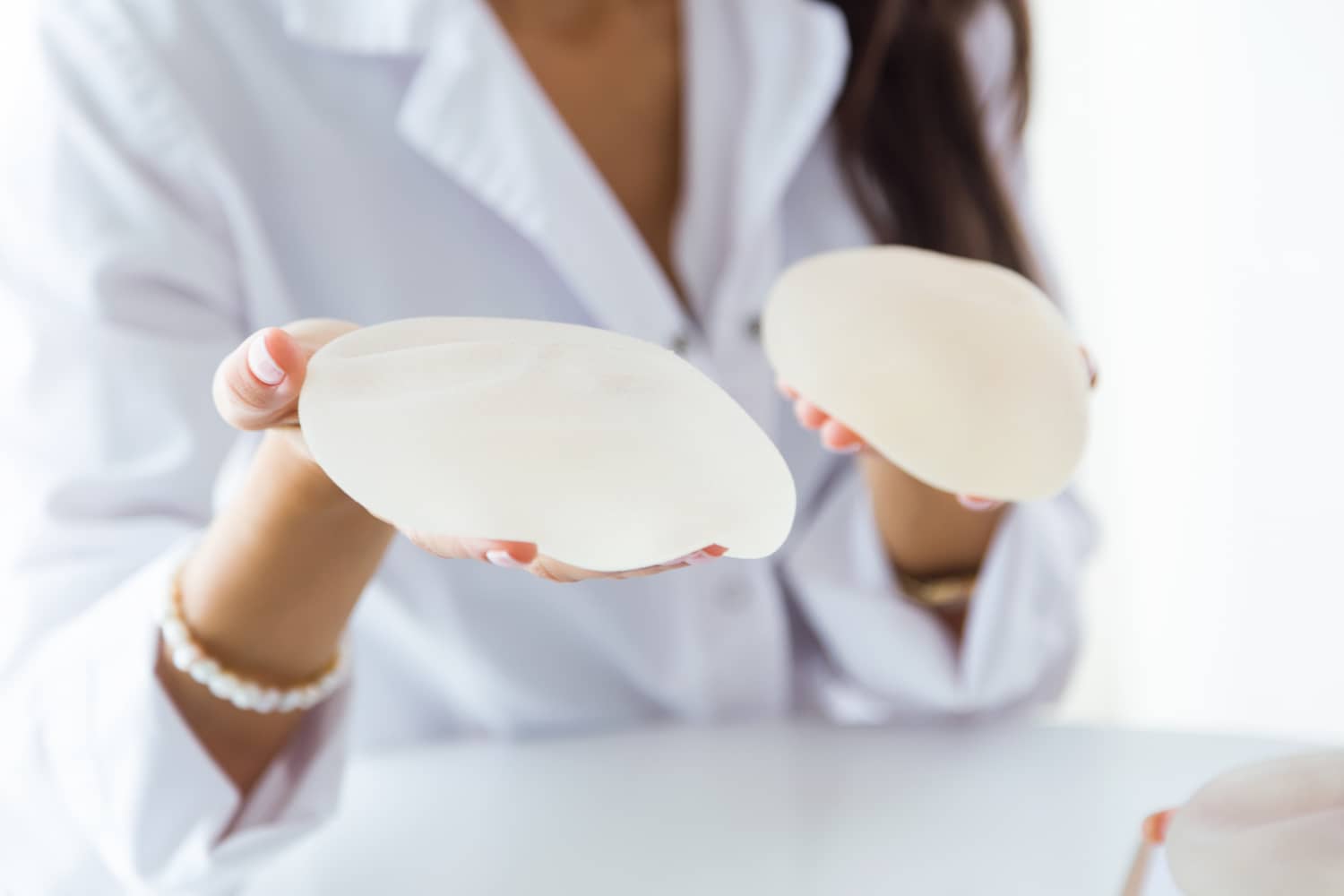
A prosthetic eye — commonly called a glass eye, though modern versions are typically made of acrylic — is a custom-shaped shell fitted into the eye socket after vision is lost. It does not restore sight. It is designed for appearance, comfort, and to maintain the structure of the eye socket. Abby Hornacek wears a prosthetic in her right eye. Viewers who notice the occasional green-tinted lens she has worn on camera are seeing a protective ocular lens worn over the prosthetic or over her remaining functional left eye — a precautionary measure that eye care specialists universally recommend for individuals with monocular vision (functional sight in only one eye).
Living with one functional eye requires real adaptation. Depth perception — which the brain normally calculates by comparing input from two eyes — must be relearned through other cues: object size, shadow, perspective, and motion. Peripheral vision on the affected side is gone. Activities that most people navigate automatically require a higher level of conscious spatial awareness. Abby has adapted completely. Watching her on PARK’D — hiking through Zion National Park, white-water rafting, cycling through remote terrain — there is no hesitation, no visible limitation. She has rebuilt not just her career but her physical relationship with the world, and done so on her own terms.
From Athlete to Journalist: How the Injury Redirected Her Life
When the path of professional athletics closes, it does not always open another door cleanly. For many young athletes, the identity loss is as painful as the physical one. Abby Hornacek’s response to that closing was to ask a clear and practical question: if sports cannot be my career, how do I stay as close to sports as possible?
Her answer was broadcast journalism. She enrolled in the Annenberg School for Communication and Journalism at the University of Southern California and graduated with a degree in Broadcast Journalism in May 2016. She did not wait for graduation to start building experience. While still a student, she anchored for Trojan Vision Television — USC’s student-operated television station — reaching an audience of roughly 29,000 students and 18,000 university employees. She also reported for Annenberg TV News and entered the Miss Arizona pageant circuit, where she became Miss Desert Rose and placed third runner-up to Miss Arizona — experiences that sharpened her presence and composure under pressure.
Her Career Timeline
- 2014: NBA Sports reporter
- 2015: NBA Summer League correspondent
- Fox Sports San Diego: Feature reporter and co-host, San Diego Prep Insider
- 2019: Relocated to New York City, joined Fox News as on-air host
- Fox Nation: Host of PARK’D, Ride to Work, and American Arenas
PARK’D in particular has become the show most identified with her public persona. Now in multiple seasons, it takes viewers through American national parks — not on paved paths, but through physically demanding adventures that demonstrate, quietly but unmistakably, that the woman who lost an eye to a volleyball is not living a diminished life.
Eye Safety in Volleyball and Other Sports: What the Evidence Shows
Abby Hornacek’s experience is not a statistical outlier. Sports-related eye injuries affect an estimated 30,000 Americans each year who require emergency room treatment, and eye care organizations consistently report that the majority of these injuries are preventable.
Volleyball, in particular, presents a specific risk profile. The ball travels at high speed, impacts are often to the face or head rather than the hands, and protective eyewear is rarely worn at recreational or even competitive amateur levels. The sport does not carry the same eye-protection culture as, say, racket sports — where the connection between ball velocity and eye socket dimensions is more widely understood.
- The American Academy of Ophthalmology estimates that 90 percent of sports-related eye injuries are preventable with appropriate protective eyewear
- Polycarbonate lenses are the recommended standard — they absorb impact without shattering and provide optical clarity
- For individuals who have already lost functional vision in one eye, protective eyewear for the remaining eye is not optional — it is medically essential
- Even a modest $25 to $50 pair of certified sports goggles can prevent the kind of injury that cannot be surgically reversed
The National Eye Institute states clearly: if you experience sudden floaters, flashes of light, or a shadow across your vision after any head or eye impact, go to an emergency room immediately. Do not wait. Retinal detachment can cause permanent vision loss — but getting treatment right away can protect your vision.
Conclusion: A Loss That Became a Direction
Abby Hornacek’s eye injury is a fact about her life that she carries without drama and without making it the center of her public identity. She has spoken about it honestly when asked, and then moved on to what she actually wants to talk about: national parks, outdoor adventure, sports, and the stories worth telling. What makes her story worth understanding is not the injury itself — it is what she did with the space it created. A door closed. She found a different one. That door led to USC’s journalism school, then to Fox Sports, then to Fox News, then to Fox Nation, and eventually to PARK’D — a show that has her hiking, climbing, and kayaking through some of the most demanding terrain in the country, with one eye, without complaint, with visible joy.
The abby hornacek eye injury is a permanent part of her story. But it is a single chapter — not the whole book. The rest of the book is being written on trails, in studios, and in every moment she chooses to show up fully, regardless of what she lost along the way. If you take one practical thing from her experience, let it be this: protective eyewear in sport is not an inconvenience. It is the difference between a story like Abby’s and a story that ends differently. Wear the goggles.